Table of contents
Forget the familiar Big Five circuit, travel in southern Africa is quietly being redrawn by travelers who want fewer convoys, longer sightings, and stories that feel earned rather than staged. From community conservancies to sand-track concessions, “offbeat” safari routes are no longer a niche for hardened overlanders, they are becoming a defining choice for families, photographers, and first-timers alike. The shift is measurable in crowding data, conservation outcomes, and what guests remember most, because remoteness changes the rhythm of a day in the bush.
Why the “quiet safari” is booming
It starts with a simple question: when did a safari become a traffic jam? In peak season, some headline reserves can see multiple vehicles stacked at popular sightings, particularly around leopard or lion. Independent crowding studies and park visitor statistics show the same pattern across major wildlife destinations: demand concentrates on a few famous nodes, and pressure rises fastest where access is easiest. Kruger National Park, for example, logged about 1.8 million visitors in the 2023/24 financial year, a reminder that iconic parks remain extraordinary, yet also heavily used, especially along well-known tar roads and around main rest camps.
Against that backdrop, “quiet safari” routes are booming, not because travelers are abandoning the classics, but because they are threading new geographies between them. Tourism researchers have long tracked the “dispersion effect”: when information improves and booking becomes easier, travelers spread to secondary areas, reducing pressure on hotspots while seeking novelty. Add the post-pandemic preference for space and small-group travel, and the logic becomes hard to ignore. In practical terms, that means privately managed concessions bordering national parks, community conservancies with controlled vehicle numbers, and cross-border itineraries that replace a single lodge-hopping loop with a more varied arc, river to desert to woodland.
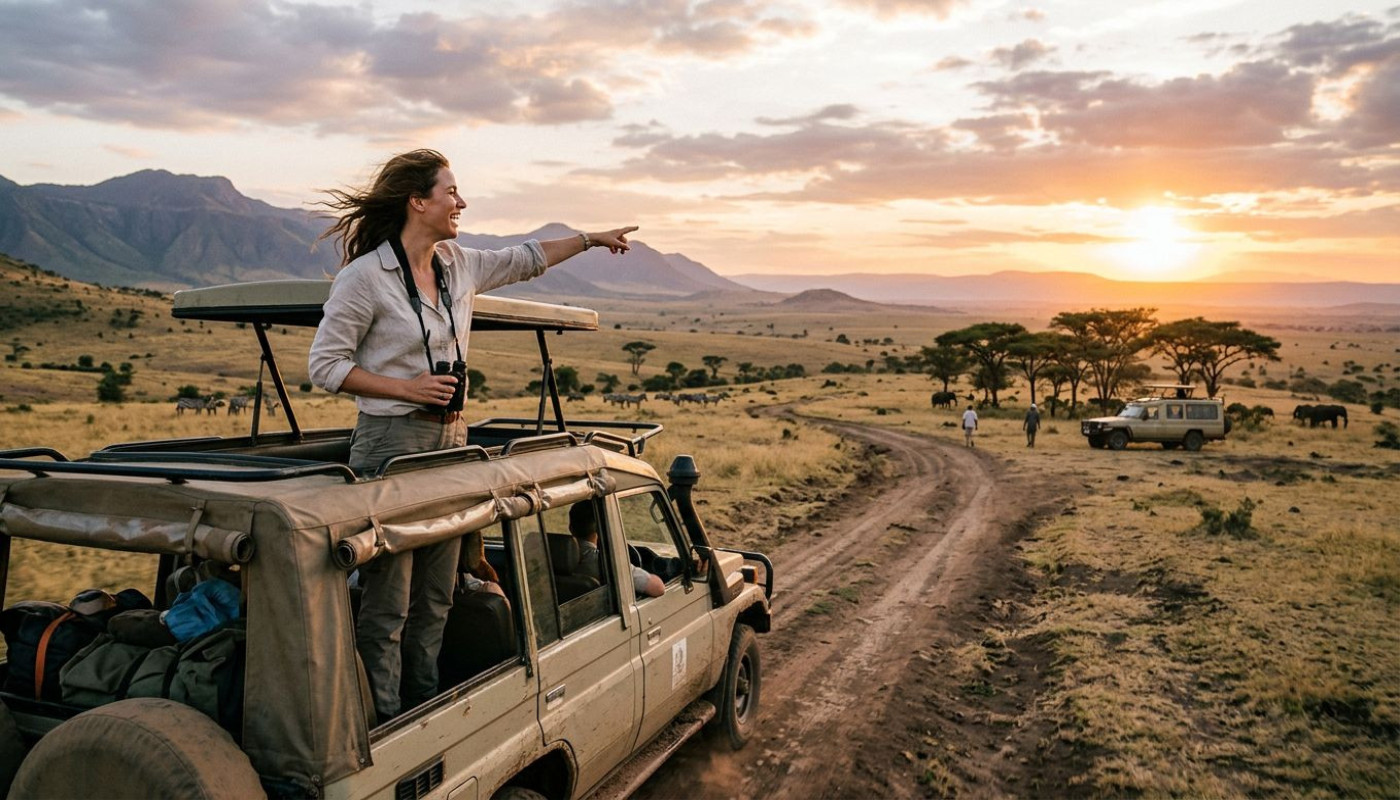
The appeal is not only solitude, it is also time. Offbeat routes tend to favor fewer bases and longer stays, which increases the odds of meaningful wildlife behavior rather than “drive-by” sightings. Guides in low-density areas frequently report that guests remember narrative moments, a pack of wild dogs hunting for an hour, elephants crossing at dusk, a honey badger doing honey badger things, more than they remember species lists. The point is not to be contrarian, it is to align logistics with how wildlife actually lives, moving, resting, and feeding beyond the schedule of a convoy.
Four detours that change everything
Want a safari that feels like a discovery, even in 2026? The most powerful detours are not necessarily far, they are simply routed differently. In South Africa, one proven alternative is to pair Kruger’s public roads with a private concession on its western edge, such as Sabi Sand or Timbavati, where off-road tracking and strict vehicle limits can transform sightings, especially for leopards. Another is to build in the Waterberg Biosphere in Limpopo, a rugged plateau of cliffs and bushveld that swaps high-density game drives for landscapes, rarer species, and a sense of space that many travelers do not associate with South Africa at all.
Across the border, Botswana’s structure naturally rewards travelers who go “sideways”. The Chobe Riverfront is famous, but the deeper Chobe Forests and Savuti change the tone dramatically, with longer drives and fewer boats in view, while the Okavango Delta’s private concessions offer controlled access that can make a morning feel like it belongs only to you. In Namibia, the detour is the destination: Damaraland and the Hoanib corridor are not about ticking boxes, they are about desert-adapted elephants, shifting light, and the jaw-dropping fact that wildlife survives in landscapes that look almost lunar. Zambia’s South Luangwa remains a reference for walking safaris, yet travelers increasingly link it with Lower Zambezi, trading one concentrated valley for a riverine counterpoint where sightings play out along the waterline.
These routes do not work by magic, they work by design. Distances are longer, roads can be rough, and light aircraft transfers add cost, but the payoff is a different emotional curve, anticipation, long stretches of silence, and the thrill of arriving somewhere that does not feel pre-chewed by mass itineraries. Many travelers also underestimate how much variety matters: shifting from mopane woodland to floodplain to dunes changes not just species, but also the palette of memories, smells after rain, dust in late afternoon, and the way a night sky looks when the nearest town is hours away.
What the numbers say about impact
Is “offbeat” just a marketing word, or does it change real outcomes? The clearest measurable differences show up in vehicle density, revenue distribution, and conservation financing. Low-density concessions typically cap vehicles at sightings, enforce guide radio etiquette, and set bed numbers that act as a ceiling on pressure. That is not altruism, it is product design, but it also aligns with conservation goals. In southern Africa, the economic logic of protected areas is increasingly tied to tourism receipts, and where those receipts flow matters. South African National Parks, for instance, relies heavily on tourism income to fund operations across its network, including parks that cannot self-finance at the same level as Kruger.
Community conservancies offer another data-driven argument. In Namibia, communal conservancies have been widely cited by conservation bodies and researchers as a key mechanism behind wildlife recoveries in some regions, with tourism and sustainable use generating incentives for protection and local employment. Botswana’s high-value, low-volume model, debated as it is, has also been credited with limiting mass infrastructure in sensitive delta habitats. None of these systems is perfect, and all face pressures, climate shocks, governance disputes, human-wildlife conflict, but the through-line is consistent: where tourism income is predictable and linked to land stewardship, conservation outcomes tend to be more resilient over time.
For travelers, the impact is not just moral, it is experiential. Lower density often means guides can wait longer, reposition more thoughtfully, and interpret behavior rather than rush to the next radio call. It also tends to reduce the “same-photo syndrome”, the uncanny effect of returning home with images that look like everyone else’s. In the best offbeat routes, you remember context, the track that led to the sighting, the long pause before a cheetah stood up, the distant thunder that changed the animals’ mood, and that context is precisely what crowds erase.
Planning smarter: time, budget, and trade-offs
Here is the uncomfortable truth: offbeat does not always mean cheaper. It can, if you replace expensive fly-in legs with self-drive segments and pick shoulder season dates, yet remoteness usually carries costs, whether in fuel, vehicle wear, charter flights, or simply the value of time. The smartest planning starts with priorities, not with a map. If your must-have is big cats and photographic proximity, a private reserve adjacent to Kruger can outperform a longer cross-border loop. If your must-have is landscape and solitude, Namibia’s northwest or Botswana’s deeper concessions can deliver a level of quiet that is hard to buy elsewhere.
Seasonality is the other lever travelers routinely underuse. Shoulder seasons can offer a sweet spot, lower rates, fewer vehicles, and still-strong wildlife viewing, especially in regions where water concentrates game even outside peak months. Rain can complicate roads, yes, but it also brings dramatic skies, newborn animals, and lush backdrops that transform photos. Logistics also reward realism: long drives can be glorious, but they can also flatten a trip if you stack them day after day. One well-placed flight can be worth it if it protects prime time on safari, sunrise and late afternoon, rather than burning it on transit.
Digital planning has improved, but it has also created a paradox: the easier it is to book, the more people converge on the same “top 10” lists. That is why working from a broader base of route ideas matters, and why travelers often start research on the web before pressure-testing an itinerary with real driving times, park entry rules, and the practicalities of border crossings. Offbeat routes reward those who verify details, fuel availability, seasonal road conditions, and lodge access policies, because the margin for improvisation shrinks as you move away from the main corridors.
How to book without overpaying
Start with dates, then lock transport, and only then commit to lodges, because availability and pricing in small concessions can swing sharply. For a one- to two-week trip, many travelers find value in mixing one higher-end, low-density stay with a more affordable base, rather than trying to keep luxury constant. Ask about vehicle limits, guiding ratios, and whether off-road driving is allowed, because those rules can matter more than thread count.
Budget for park fees, flights, and insurance, then look for shoulder-season deals and family offers, and check whether any national or regional incentives apply to domestic travel. Reserve early for peak winter weeks, but stay flexible on routing, because the best “horizon-chasing” memories often begin with a detour you did not plan to love.
Similar articles