Table of contents
They missed a turn, ignored a checklist, and ended up with the memory that outlasted the postcard. In a travel economy rebuilt around predictability, more visitors are quietly doing the opposite, swapping pre-packed itineraries for detours, local tips, and last-minute decisions, and then sharing what actually happened when the plan collapsed. From desert roads outside Abu Dhabi to neighborhood kitchens, these off-script stories show how today’s travelers chase something harder to book: surprise, friction, and the feeling of earning a place.
When the itinerary breaks, the city appears
Who plans for the wrong exit? Not many, and that is precisely why the moment sticks. Ask frequent travelers what they remember most, and it is rarely the museum label they photographed, it is the minor miscalculation that opened a door. In Abu Dhabi, one couple described how a “quick stop” after a late taxi drop-off turned into an hour-long conversation with a shop owner who insisted they try tea, then drew a map on a receipt, circling a waterfront stretch they had never seen in glossy guides. They arrived at dusk, when the light softened the skyline, and the promenade felt less like a landmark and more like a lived-in neighborhood.
This kind of experience is not just romantic narrative, it mirrors a measurable shift in how people travel. Over the past few years, tourism researchers and industry reports have repeatedly pointed to the rise of “experiential” and “local” travel, and to the role of social media in rewarding authenticity over perfection. The mechanics are simple: rigid itineraries optimize for coverage, while flexible ones optimize for discovery, and the latter tends to produce more distinctive stories, which in turn perform better online and reinforce the behavior. Even hotel concierges notice it; questions are changing from “What are the top five sights?” to “Where would you go after work?” and “What’s worth it near here, right now?”
There is also a structural reason off-script travel is flourishing: cities are more readable than they used to be. Navigation apps reduce the fear of getting lost, cashless payments reduce the friction of small purchases, and translation tools help travelers ask one more question instead of retreating into silence. The result is a paradox, and it matters: the infrastructure that makes travel more controlled also makes spontaneous choices safer, and in places like Abu Dhabi, where modern transit, wide boulevards, and layered neighborhoods sit side by side, the leap away from the plan can feel less risky than it once did.
Still, “off-script” is not the same as “aimless.” Travelers who do it well often prepare differently, saving a shortlist of neighborhoods, markets, and viewpoints, then leaving breathing room between them. Many now build a trip around a few anchors, and let the connective tissue change on the fly; that approach makes it easier to follow a recommendation from a taxi driver, a barista, or a museum guard without feeling like something essential is being sacrificed. The plan becomes a scaffold, not a cage, and the city, finally, gets the chance to be more than a sequence of stops.
Desert detours that turn into rituals
The sand does not care about your schedule. That is why desert stories so often read like turning points, with travelers realizing, mid-trip, that the “activity” they booked is not the main event. One group of friends, visiting the UAE for the first time, set out for a standard sunrise outing, and ended up staying hours longer because their driver suggested a different ridge, then waited while they sat in silence, watching the color shift across the dunes. They later described it as the first time in months they had done nothing, and felt no guilt about it.
These narratives are common because deserts magnify small decisions. Leave ten minutes earlier, and you arrive with the soft light; choose a different track, and the horizon changes shape. In Abu Dhabi’s wider region, travelers talk about learning to treat time differently, planning fewer “must-dos” per day, drinking more water than they think they need, and letting the temperature dictate the rhythm. Even experienced city-hoppers find themselves humbled, and then grateful, because the environment forces a kind of attention that urban life rarely requires.
It is also where the line between curated and real can blur, for better or worse. Desert tourism is a major business, and many packages are designed to deliver the same Instagram-friendly sequence: dunes, photos, dinner, show, return. Yet the travelers who come back with the richest accounts tend to be those who adjust the formula, asking for a quieter stop, lingering away from the group, or prioritizing a conversation over a performance. One traveler recalled declining an extra “add-on” in order to sit with staff and ask about their workday, and he came away with a far clearer sense of how the tourism machine runs, and of the human labor behind the spectacle.
If you are trying to replicate that kind of detour without guessing, practical information matters. Understanding what is realistically reachable, what times of day are comfortable, and what to expect from transport can be the difference between a meaningful deviation and a wasted afternoon. Travelers often start with broad context, then narrow into choices based on mood and weather, and resources such as https://www.abudhabi-trip.com can help map the terrain before you decide where to go off-road, literally or metaphorically.
Small encounters, bigger truths about place
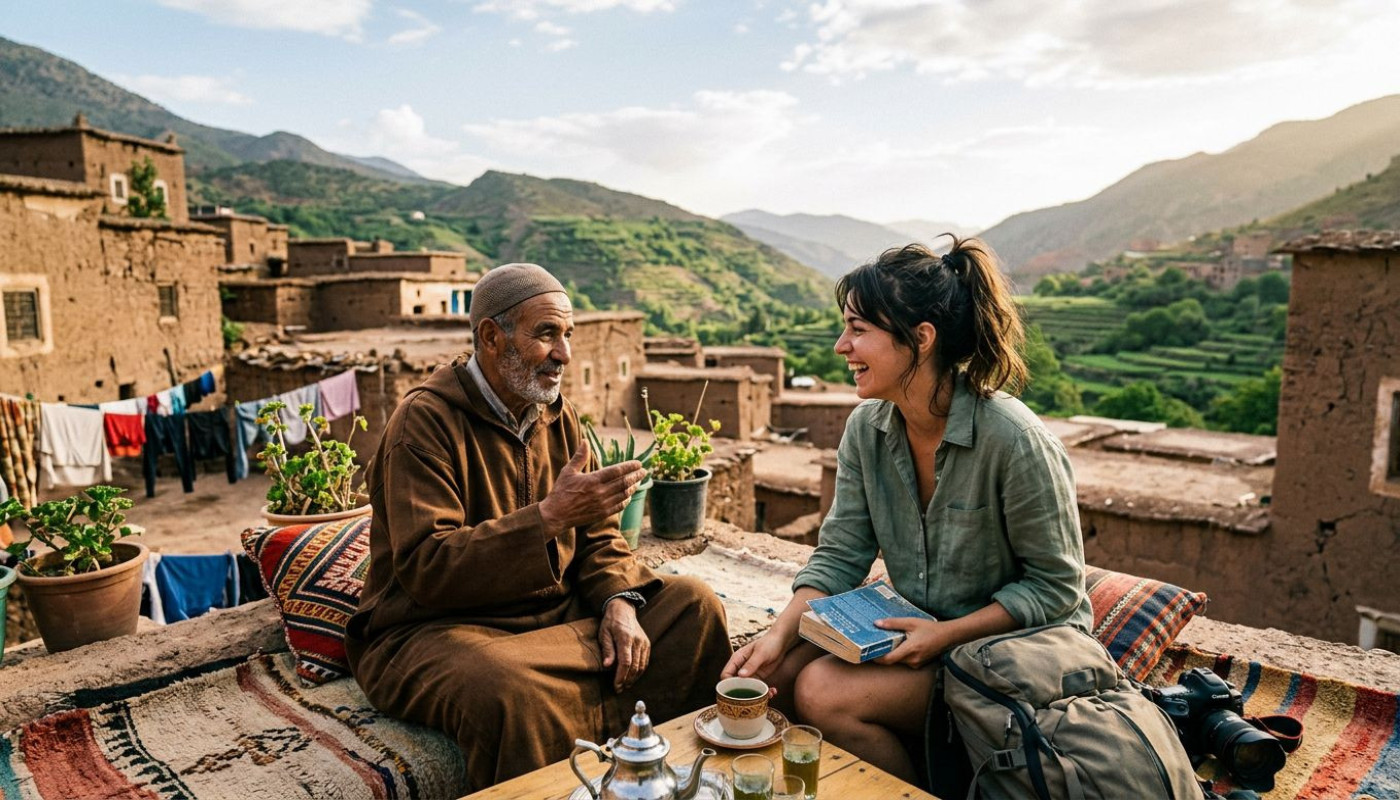
Want to know a city fast? Ask one good question. The most compelling off-script stories rarely involve secret attractions, they involve ordinary people and small moments that reveal how a place works. In Abu Dhabi, travelers often mention the ease of striking up conversations in cafés, hotel lobbies, and galleries, and then being offered context that no brochure provides, like why a neighborhood has changed, which foods people miss from home, or how families spend Friday afternoons. A traveler who wandered into a small bakery for water left with a lesson on local breakfast habits, plus a list of dishes to try that night.
These encounters matter because they challenge the idea that travel is just consumption. When the interaction is genuine, the visitor stops behaving like an audience member, and becomes a participant, even if only briefly. That shift can be subtle, and it can also be uncomfortable; sometimes the “truth” is that you do not understand the social code, or that your assumptions are wrong. Several travelers describe moments of embarrassment that later became the most educational part of their trip, such as misreading a queue system, misunderstanding a greeting, or asking a question that landed badly. Off-script travel includes those frictions, and it benefits from them, as long as the traveler responds with humility.
There is an ethical dimension, too, and serious travelers increasingly talk about it openly. Not every “local moment” is meant for outsiders, and not every recommendation should be pursued just because it feels authentic. Neighborhoods can be disrupted by viral attention, and small businesses can be overwhelmed by sudden waves of visitors who are chasing the same “hidden” thing. The best off-script stories are not about extracting access, they are about noticing what is offered, spending money responsibly, and leaving the place no worse than you found it. That might mean asking before taking photos, choosing less intrusive settings, and learning when to step back.
When travelers get that balance right, the payoff is real. One woman described being invited, unexpectedly, to join a family-style meal after complimenting a dish at a casual eatery, and the evening became a lesson in hospitality, boundaries, and cultural nuance. She did not portray it as a “hack,” she portrayed it as a gift, and that distinction is important. The story’s power came from its specificity, and from the care with which she framed the people involved, rather than treating them as background to her adventure.
How travelers plan for spontaneity now
Spontaneity is not the absence of planning, it is a different kind of planning. Travelers who successfully “go off-script” tend to do three things before they arrive: they learn the basics of local etiquette, they identify a few flexible targets, and they budget for last-minute choices. The first reduces the risk of awkwardness, the second prevents decision fatigue, and the third keeps spontaneity from turning into expensive panic. In practical terms, that might look like booking only the first night’s hotel in a multi-stop trip, leaving afternoons unassigned, and saving a portion of funds for a taxi, a ticket, or a meal that was not on the original spreadsheet.
Technology plays a double role. On one hand, it enables the controlled vacation, with timed entry slots, live queue updates, and reservation-only dining; on the other, it makes the improvised day viable. Travelers now build “option lists” in mapping apps, follow local accounts for event updates, and check transport conditions before committing, and then they decide late. In a destination like Abu Dhabi, where temperatures and daylight can shape the day, this approach can be more than a preference, it can be a comfort strategy, allowing people to move heavier activities to cooler hours and keep midday for indoor spaces, shaded walks, or rest.
Money is part of the equation, and off-script does not automatically mean cheaper. In fact, last-minute decisions can cost more, especially when they involve private transport or premium time slots. But flexibility can also save money, because it lets travelers avoid overpriced bundles that include things they do not want, and it encourages them to choose what feels worth paying for in the moment. The key is to treat budget like a tool, not a constraint, setting limits in advance while leaving room for a few splurges that might become the highlight.
Finally, there is the question of safety and responsibility. Going off-script should not mean ignoring basic precautions, particularly in unfamiliar environments. Travelers who do it well keep someone informed, respect local regulations, and stay aware of heat, water needs, and distances, and they understand that some “detours” are best taken with proper guidance. The most seasoned voices say it plainly: the goal is not chaos, it is freedom with guardrails, because the best stories are the ones you can tell with clarity, not the ones you barely survive.
Booking smart, leaving room to breathe
Reserve key experiences early, especially in peak periods, and keep the rest flexible so you can follow good advice on the ground. Set a clear daily budget, then ring-fence extra for transport and one spontaneous meal or ticket. Check whether discounts or seasonal offers apply, and confirm what’s included before you commit; smart planning buys you the time to go off-script safely.
Similar articles